Steaming Ahead : How the Railways Changed the Fish we Eat
In this 200th anniversary year of commercial rail travel in the UK, we take the opportunity to look at the wide-ranging impacts of these technologies on a particular industry – fishing.
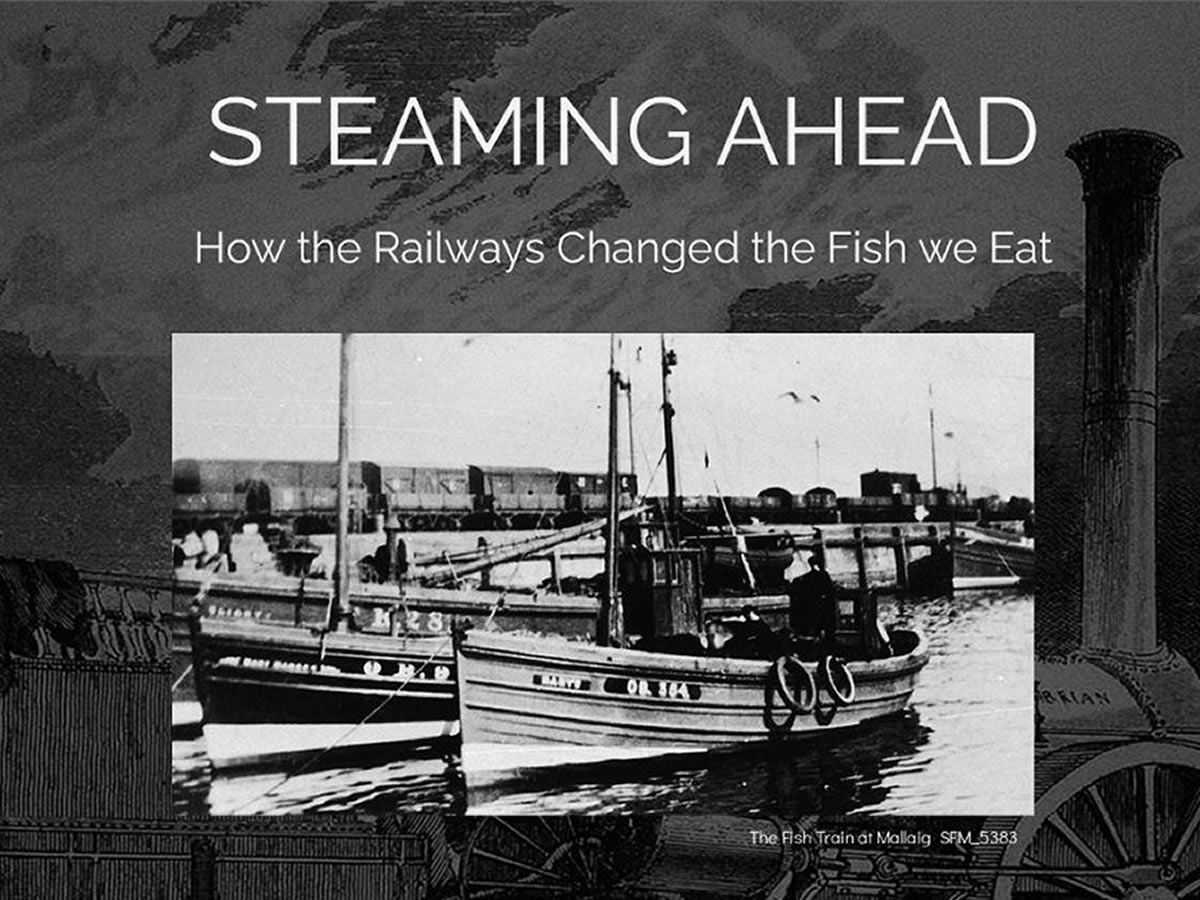
About Steaming Ahead : How the Railways Changed the Fish we Eat
Rail transport was one of the most important technological inventions of the 19th century and a key element of the Industrial Revolution. The Stockton & Darlington Railway opened on September 27, 1825, connecting places, people, communities and ideas and ultimately transforming the world.
At this time, the efficiency of steam engines was rapidly improving. Although steam had been recognised as a source of power from at least the 1st century CE, its use had remained largely experimental. Throughout the 1700s, British engineers, notably Thomas Newcomen, James Watt and Richard Trevithick, worked to develop engines to support the growing mining industry. Early stationary engines were placed at coal mines to power water-pumps and haul coal wagons. By the early 1800s, the addition of connecting rods and cranks enabled engines to turn wheels. Now steam engines were capable, not only of driving machinery, but also of driving vehicles.
The application of steam power to transport had far-reaching effects on the way people lived, worked and communicated, and fishing was not immune. From transporting fish and fish workers, to changing how fish were caught and even influencing our national dish, steam power and railways changed the face of Britain and of the fishing industry.
In this 200th anniversary year of commercial rail travel in the UK, we take the opportunity to look at the wide-ranging impacts of these technologies on a particular industry – fishing.
Where possible we will update our listings to notify of cancelled, postponed and rescheduled events, however we STRONGLY ADVISE that you check with the venue/organiser in the first instance for updates.
All information (whether in text or photographs) is supplied in good faith but should not be relied upon as being a statement of representation or fact.GOT AN EVENT TO SHARE? It's free to post your events on What's On Fife, click here to find out more!
Want to be the first to hear about what's happening in Fife? Follow us on Facebook and join the What's On Scotland Group!Sponsored Links

Similar events you might like...
Sponsored Links


Find other events in Fife
Sponsored Links